Monday, October 6, 2008
MY LAST PRESENT

Wednesday, September 10, 2008
CHAPTER 6
670-632
Prophet Muhammad, Founder of Islam
632-661
Age of the four so called "ABU BAKAR, OMAR, UTHMAN and ALI.
661-750
OMAYYAD DYNASTY.
732
"Charles martel defects the Arabs at Porteirs, end of Muslim expansion into Europe.
ROMANESQUE
Roman architecture produced the first monumental buildings since the decline of the Ancient Classical world.
The Roman Style was primarily applied to sacral architecture ( church, monasteries )
773
Frankish Empire.
800
Charlemagne crowned emperor.
920
Foundation of the Colter Empire in central Mexico.
1066
Battle of Hasting Norman conquest of England.
| |
 |  Photo, exterior | Photo, exterior |
| | ||
The dome of St. Mark's in Venice, one of the largest Romanesque Churches, Dating from the 11th century.


Wednesday, September 3, 2008
CHAPTER 5
from Pyramids to Post Modenism
THE EYGPT
*2600-2450 BC
-1st dynasty in UR,The Southern in Mesopotamian
-City becomes the centre of Sumerian Culture
*2600-2000 BC
-Early Munion Culture On create:
Circular grave Complexe, gold jewellery, ,Bronze, and copper dagger, Minion Culture.
*2350-2300 BC
-Sargon / Subdues.
-Mesopotamia, part of Syiria ,Asia Minor, and Elam, and founds Akkadian empire, new weapon & Military Technique.
*2800-1535 BC
Middle Kingdom and 2rd Intermediate Period in Egypt: Fortification of The Cities, 2nd GOLDEN AGE in EGYPT.
The Pyramid of Gizah 3rd MILLENIUM BC.
With a length of more than 750 ft (230 M).
On the edge and a height of almost 500 ft (230 M).
The Cheops Pyramid is the large.
Egyption temple complexe were laid out on a longitudinal axis flanked with Various coloummned court and halls, Luxor Temple ,2nd millenium BC.
CLASSICAL GREECE
6th century BC
336-323 BC
Empire of Alenxander de Great.
232-280 BC
Diadochian Wars Over the succession to Alexander's empire.
264-241 BC
First Punic War between Rome,and Carthage.
3rd century BC
263-129 BC
Kingdom of Pergamon:
Founding of the great library and construction of the Famed Pergamon Alter.
The Pathernon on the Athenian Acropolis. Dating from 449-438 and built entirely of Marble , The Parthenon is the ideal example of peristyle temple.
The City of Athens, The lower porpotion is made of large stone blocks. The upper of clay Brick.
Wednesday, August 27, 2008
THE ARCHITECT ( NORMAN FOSTER)
norman foster | |
| philosophy | |
foster breaks with tradition. the key to foster's approach is that he seems always to be aspiring to an elsewhere, another world, partly that of a long-gone age - the world of industrial pioneers, the mystical and fascinating world of jules verne... a world too of contemporary futurism, space conquest, science fiction and cartoon strips, a world of suprahuman places. foster's single minded individualism is exceptional, he refuses to be lumped in with the 'high-tech' style, he recognizes no professional peers. --------- '... no detail should be considered too small' foster said, ' the ends are always social - generated by people rather than the hardware of buildings... ... since it's inception, more than thirty years ago, the studio has been driven by the pursuit of design excellence, based on a belief that our surroundings directly influence the quality of our lives, whether in the workplace, at home or in the wide variety of public spaces in between... ... we use technology, but not just for its own sake. I believe that the best architecture comes from a synthesis of all of the elements that comprise a building: the structure that holds it up, the services that allow it to work, the ecology of the building - whether it is naturally ventilated, whether you can open a window, the quality of natural light, the materials used - their mass or their lightness, the character of the spaces, the symbolism of the form, the relationship of the building to the skyline or the streetscape, and the way in which the building signals its presence in the city or the countryside. I think that holds true whether you are creating a landmark or deferring to historical setting. successful architecture addresses all these things, and many more... ...the quest for quality embraces the physical performance of buildings - how do they endure in a world subject to volatile change? - do they survive or become obsolete? - does the quality of thinking that lies behind their design anticipate needs which could not even be defined when they were created? only the test of time can tell... | |
Saturday, August 9, 2008
MY DAY TODAY..
Our lecturer give new assignment or we known as a project...our new project is about guard house...very interesting...but the day by day,my skin become dark because the sunshine..so.this is my sacrifice actually...even i still student...and i want to to learn more about life...
Wednesday, August 6, 2008
CHAPTER 4
CYCLICAL TIMELINE MODELS
What we have yet to be familiar with is the cyclical historial timeline which locates major in a cyclical manner."History repeats itself" may thus be explained not as exact events by domination of the management of earth.
In my class today, my lecturer ask me to fine isn't the story about ISLAM of PROPET is NABI MUHAMMAD S.A.W..
According the AL-QURAN, NABI MUHAMMAD is the last of propets in ISLAM..Along time ago,now and hereafter..
Wednesday, July 30, 2008
CHAPTER 3
What the mean of theory in architecture?
In architecture it is important to us learn and add our knowledge about theory and history.It is because, as an architect we will faces with any situation along we are involved in this field..
It is depends to AL-QURAN also for the MUSLIM that believed a whole of law of our life it's according to the centre point.And the MUSLIM should know about that.
FOR YOUR INFORMATION!!!
HISTORY OF MESOTAMIAS
CAVE DWELLING
Archeological and social importances
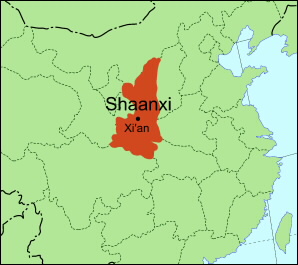
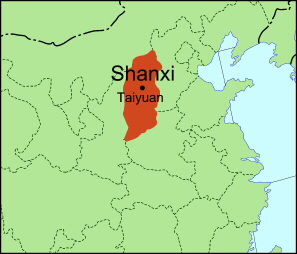
Cave dwellings are common in certain areas of northern China where they serve as homes for more than 40 million people. In the provinces of Shaanxi and Shanxi where the yellow earth (called loess) is quite compacted, cave houses have been in use for centuries. Below is a picture of this terrain in Shaanxi.

| There are two main kinds of cave dwellings below.
|
| The first type of cave dwellings are those carved out of the side of a cliff. Cliffside dwellings are often south-facing, and the facades are sometimes faced with bricks or stone.
Why are the exterior openings framed with arches? | |
|
| |

|
The courtyards of cliff dwelling are usually larger than those of pit dwellings, because they are easier to create than sunken courtyards which must be excavated.
| |
|
| |
 The second type of cave dwelling is built where there are no hills. In this situation, people create sunken courtyards.
| | |
|

Archaeological and social importances
(The Iron Gates Mesolithic)
This harmony between the environment and architectural forms has, on the other hand, been achieved with measurements and proportions which cannot be found anywhere in nature. The architecture of Lepenski Vir has something extremely mathematical in it; that is, in all its forms you can feel the presence of concrete lines and specific numbers. It can clearly be felt that the architectural forms are saturated with the mysticism of numbers, but the primary unit measure cannot be translated into today's mathematical language; it is not one specific number or an anthropological measurement and, although the module has been made through rational procedures, it still seems like a mystical dimension that has built the microcosms and macrocosms of Lepenski Vir.


The picture above show that the structure of gates Mesolithic